Platelet-Rich Plasma (PRP)
- Home
- Platelet-Rich Plasma (PRP)
Overview
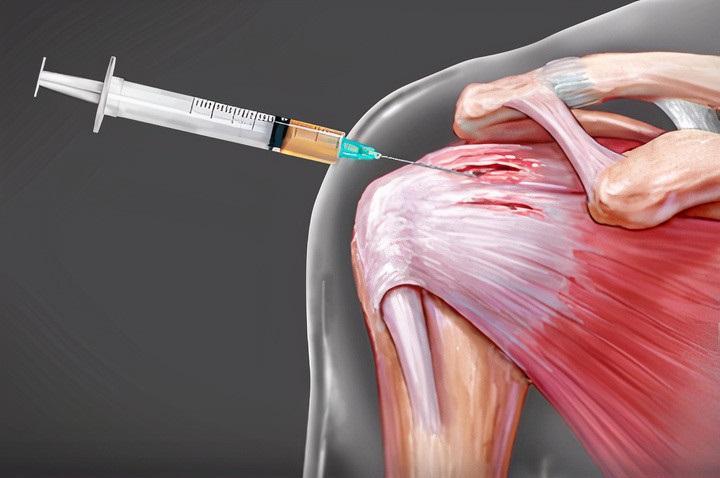
PRP injections involve drawing a small volume of the patient’s own blood, processing it to concentrate platelets, and injecting it into the knee joint. The platelets release growth factors that are believed to promote healing and reduce inflammation.
Mechanism of Action
Growth factors from platelets stimulate tissue regeneration and modulate inflammation, which may lead to gradual improvement in symptoms and joint health.
Efficacy
Improvements are usually seen after several weeks, with benefits persisting for months. PRP may be more suitable for earlier stages of osteoarthritis or active individuals.
Safety and Side Effects
PRP is well-tolerated, with minimal risk as the patient’s own blood is used. Mild soreness and swelling may occur post-injection, but serious side effects are rare.
Other injection options: PRP is one of several knee injection treatments Mr Chauhan offers. Alternatives include Arthrosamid hydrogel injections for longer-lasting relief, hyaluronic acid (Ostenil) to lubricate the joint, and steroid and local anaesthetic injections for rapid short-term relief. To discuss which is right for you, book a consultation or review the treatment fees.
Regen Lab patented technology that allows the safe, closed-circuit preparation of a cell-friendly PRP-HA network in which platelets and plasma components are retained.
- Hyaluronic acid improves the activity of several molecules contained in platelet-rich plasma to provide additional benefits to OA patients.1 Both PRP and HA have been extensively used not only to reduce clinical symptoms, but also to slow down OA progression.5,7
- When PRP and HA are used in combination these effects are enhanced and prolonged. HA creates a bioactive scaffold in which the platelets progressively release their growth factors. RegenPRP™ does not negatively affect the mechanical, elastic or viscous properties of HA.1